


















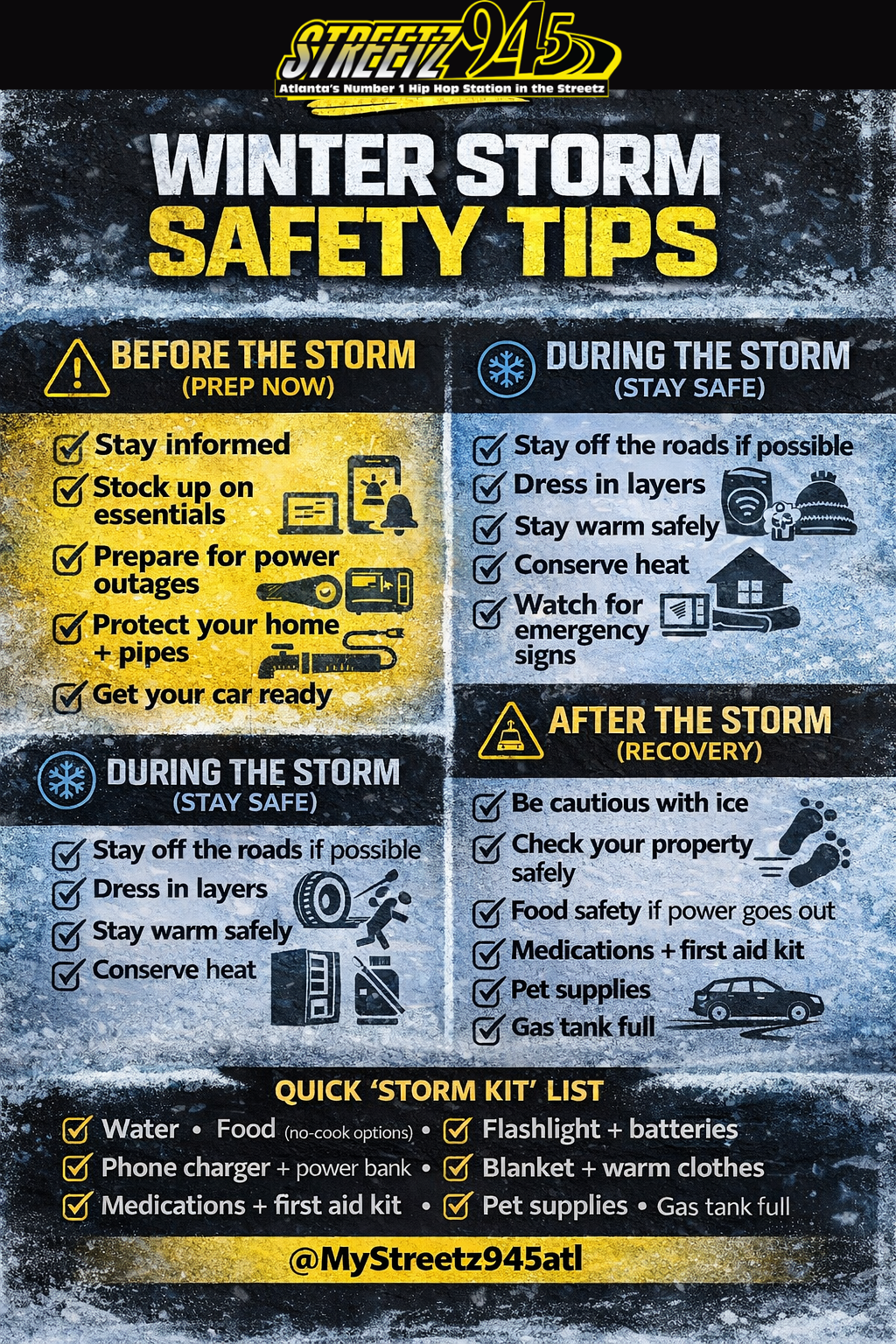
Atlanta is preparing for a winter weather system that could bring dangerous road conditions, freezing temperatures, and possible power outages. Whether it’s snow, ice, or freezing rain, winter storms can impact travel, homes, and everyday routines—especially in areas not used to extended winter conditions.
To help you stay safe, here are important steps to take before, during, and after the storm hits.
Prepare Before the Storm Arrives
The best way to stay safe is to prepare early. Make sure you and your household are ready for possible road closures, school delays, and outages.
Stock up on essentials for at least 2–3 days:
-
Bottled water and non-perishable foods
-
Flashlights and extra batteries
-
Portable phone chargers or power banks
-
Blankets, warm clothing, gloves, and hats
-
First aid kit and any prescription medications
-
Baby supplies and pet food if needed
Prepare for possible power outages:
-
Charge all devices fully (phones, laptops, power banks)
-
Avoid relying on candles (use flashlights when possible)
-
Set your refrigerator/freezer to the coldest setting
-
Fill containers or a bathtub with water for backup use
Protect your home and plumbing:
-
Cover outdoor faucets and wrap exposed pipes
-
Bring in water hoses and disconnect them outside
-
Let faucets drip slightly if temperatures fall below freezing
-
Open sink cabinets to help warm air circulate around pipes
Get your car ready now:
-
Fill up your gas tank in advance
-
Keep a small emergency kit in your vehicle (blanket, water, snacks)
-
Check tires, windshield wipers, and wiper fluid
-
Avoid unnecessary travel once freezing conditions begin
Stay Safe During the Storm
Once winter weather begins, the main goal is to avoid travel and stay warm safely indoors.
Limit driving as much as possible
Ice is especially dangerous in Atlanta because it can form quickly and is hard to see. Bridges and overpasses freeze first—even when roads appear normal.
Dress in layers and stay warm
Wear thermal clothing and keep extra blankets nearby. If you’re using a space heater, place it at least three feet awayfrom anything flammable and never leave it unattended.
Avoid unsafe heating methods
Never use a grill, stove, or oven to heat your home. This can cause carbon monoxide exposure and become life-threatening.
Watch for emergency warning signs
Seek help immediately if you notice:
-
Flooding from burst pipes
-
Anyone showing signs of hypothermia (confusion, extreme fatigue, shakiness)
-
Headaches or dizziness indoors near heating sources (possible carbon monoxide exposure)
What To Do After the Storm
Even after the storm passes, icy sidewalks and damaged areas can remain dangerous.
Be careful walking outside
Ice can stick to steps, sidewalks, and driveways. Walk slowly, wear shoes with good traction, and hold onto railings when possible.
Check your surroundings safely
Look for fallen trees or power lines. If you see downed power lines, do not touch them—report them immediately.
Follow food safety guidelines
If the power goes out:
-
Refrigerated food is typically safe for about 4 hours if the door stays closed
-
Frozen food can last 24–48 hours depending on freezer type and temperature
-
If food smells off or looks questionable, throw it away
Quick Winter Storm Checklist
Before the storm hits, make sure you have:
✅ Water
✅ Non-perishable food
✅ Flashlight + batteries
✅ Phone chargers/power bank
✅ Blankets and warm clothing
✅ Medications
✅ Pet supplies
✅ Full gas tank
✅ Ice melt (if available)
Stay safe Atlanta—and please take this storm seriously. Preparing early and staying off icy roads can make a major difference.


No comments